Tychr’s Ivy League admissions specialists have guided over 500 students from 70+ countries to acceptances at every Ivy League university, and we’re ready to do the same for you.
Understanding the Ivy League, what it is, what makes each school unique, and which one is the right fit for you.
The Ivy League is a group of 8 private research universities in the northeastern United States, widely regarded as among the most academically prestigious and socially influential institutions in the world. For international students, an Ivy League degree opens doors worldwide.
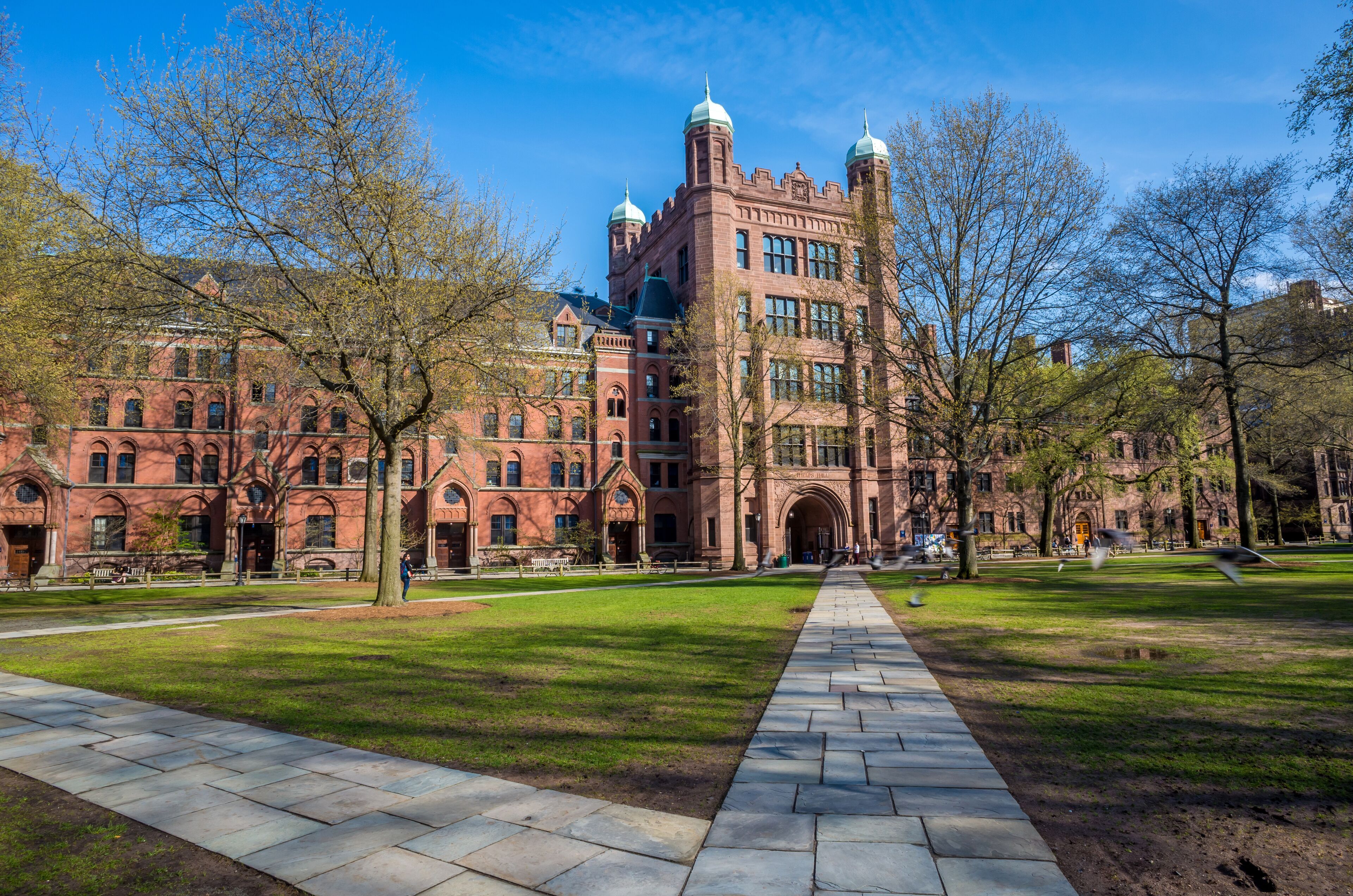
Harvard University
Consistently ranked #1 or #2 globally, the oldest university in the US and arguably the most recognised degree in the world. Known for unparalleled academic breadth, its professional schools, and a vast alumni network.
Ivy League acceptance rates have never been lower, but that doesn’t mean the right strategy can’t get you in.

Harvard University
Need-blind for international students
Columbia University
Strong international student community
Yale University
Need-blind for US students; need-aware internationally
Princeton University
Need-blind for international students
Brown University
Growing international intake
Dartmouth College
Strong alumni interviewing globally
University of Pennsylvania
Wharton among world's most competitive programmes
Cornell University
Most accessible entry point in the Ivy League
Key insight:At every Ivy League school, a meaningful percentage of rejected applicants had perfect or near-perfect academic profiles. The difference between admission and rejection at this level is almost never grades — it’s how compelling, cohesive, and authentic your application story is.
A clear-eyed breakdown of the academic benchmarks, test scores, and profile elements Ivy League schools expect, and what they’re really evaluating.
The vast majority of admitted students rank in the top 5–10% of their graduating class. IB: typically 40–45 points. A-Level: AAA or AAA* predicted. AP: a strong record of 4s and 5s across rigorous courses.
Tychr guidance: A 42 in a full IB diploma (including HL Maths and sciences) is more competitive than a 45 in a lighter course selection.
Competitive SAT range: 1500–1580+. Competitive ACT range: 34–36. Submitting scores above the 75th percentile for your target school strengthens your application; below the 25th percentile may weaken it.
Admissions officers look carefully at whether students have challenged themselves with the most demanding courses available, not just whether they achieved high grades.
Extracurricular Activities
Depth over breadth; demonstrated leadership, impact, and passion
Personal Statement
Authentic voice; compelling narrative; intellectual curiosity
Supplemental Essays
School-specific fit; genuine understanding of each university's culture
Letters of Recommendation
Specific, detailed evidence of your character and academic potential
Interview
Intellectual engagement, self-awareness, and genuine enthusiasm
Spike / “Hook”
A defining strength or achievement that makes your application memorable
Understanding the difference, and choosing the right approach, is the first practical step in your Ivy League application.
The dominant platform for US university admissions, used by the vast majority of Ivy League applicants. All eight Ivy League schools accept, and most exclusively use, the Common App: a personal profile, one main personal essay (650 words max), school-specific supplements, recommender submissions, and self-reported scores and transcripts.
Designed to increase college access for underrepresented students. A small number of Ivy League schools, including Yale and Johns Hopkins (an honorary Ivy), accept the Coalition App, but it is far less commonly used. For most international applicants, the Common App is the right choice.
Our recommendation:Use the Common App. It’s the standard platform, gives you the widest reach, and is what Tychr counsellors are most deeply expert in optimising.
Get Expert Help with Your Common App Strategy→
Your Common App personal essay is the single most powerful piece of writing in your application. Here’s how to get it right.
Your personal statement is not a highlight reel. It’s an invitation for an admissions officer to spend five minutes inside your world, understand how your mind works, and want to meet you.
The best essays are almost always about something small: a single moment, a particular obsession, an unexpected insight. Specificity creates intimacy.
Admissions officers already know your GPA and extracurriculars. The question isn't “what have you done?”, it's “who are you, and how do you think?”
An Ivy League personal statement should sound like you, not like a template or a committee. Authentic voice is both rarer and more powerful than polished prose.
The best essays move from the particular to the universal, expanding to a broader insight about the world, learning, or what you value.
Show, don't tell. Write the experience vividly enough that the reader feels the resilience themselves.

Every Ivy League school asks applicants to write additional, school-specific essays designed to find out whether you genuinely want to be at this school, or whether you’re just listing it because it’s prestigious.
What works: specific professors whose research connects to yours, a particular programme or lab, or an organisation that maps directly to something you’ve built. Intellectual and cultural fit, not prestige-seeking.
Harvard
No formal supplemental essays — relies on the personal statement, activities, and an optional additional essay
Yale
"Why Yale?", "What in particular about Yale has influenced your decision to apply?", short takes on intellectual passions
Princeton
"Why Princeton?" essay, community essay, and a creative/intellectual essay prompt
Columbia
List-based "short takes" (books, films, music) + a "Why Columbia?" and Core Curriculum essay
UPenn
"Why Penn?" + school-specific essay (e.g., Why Wharton? Why Engineering?)
Brown
"Why Brown?" + the Open Curriculum essay — why does intellectual freedom matter to you?
Dartmouth
"Why Dartmouth?", community essay, and several short prompts about campus life
Cornell
School-specific "Why Cornell?" essays that vary significantly by college (Engineering, Arts & Sciences, Dyson, etc.)
It’s not about doing more. It’s about doing the right things, and doing them in a way that tells a coherent story about who you are.
Tychr counsellors use the term “spike” to describe the defining characteristic of the strongest Ivy League applications: one or two areas of exceptional depth and achievement, supported by other activities that reinforce the same narrative. A student who founded a research journal, published an original paper, and built a community around academic writing — even with only one or two other significant activities — stands out immediately.
Original research, especially when mentored by a university professor, published in a journal, or presented at a conference, is among the most powerful achievements an applicant can demonstrate.
Building something from scratch — a business, a social enterprise, an app, a community — demonstrates initiative, resilience, and real-world impact.
National and international placements in science olympiads, AMC/AIME/USAMO, debate, Model UN, writing, or the arts carry significant weight.
Not just holding a title, but demonstrably changing something — founding a chapter, growing membership, or turning around a struggling programme.
Sustained, meaningful engagement — not a two-week trip or a one-day event — demonstrates character and commitment.
Music, visual arts, theatre, writing, or film at a competitive or professional level bring something genuinely different to a campus community.
A great letter of recommendation doesn’t just confirm that you’re a good student. It reveals who you are in a classroom, how your mind works under pressure, and what kind of person you are when no one is evaluating you.
Typically from academic subjects, ideally from teachers who know you well in subjects related to your intended area of study.
An overview of your school’s academic context and your place within it.
Some schools allow one extra letter from a coach, mentor, employer, or research supervisor.

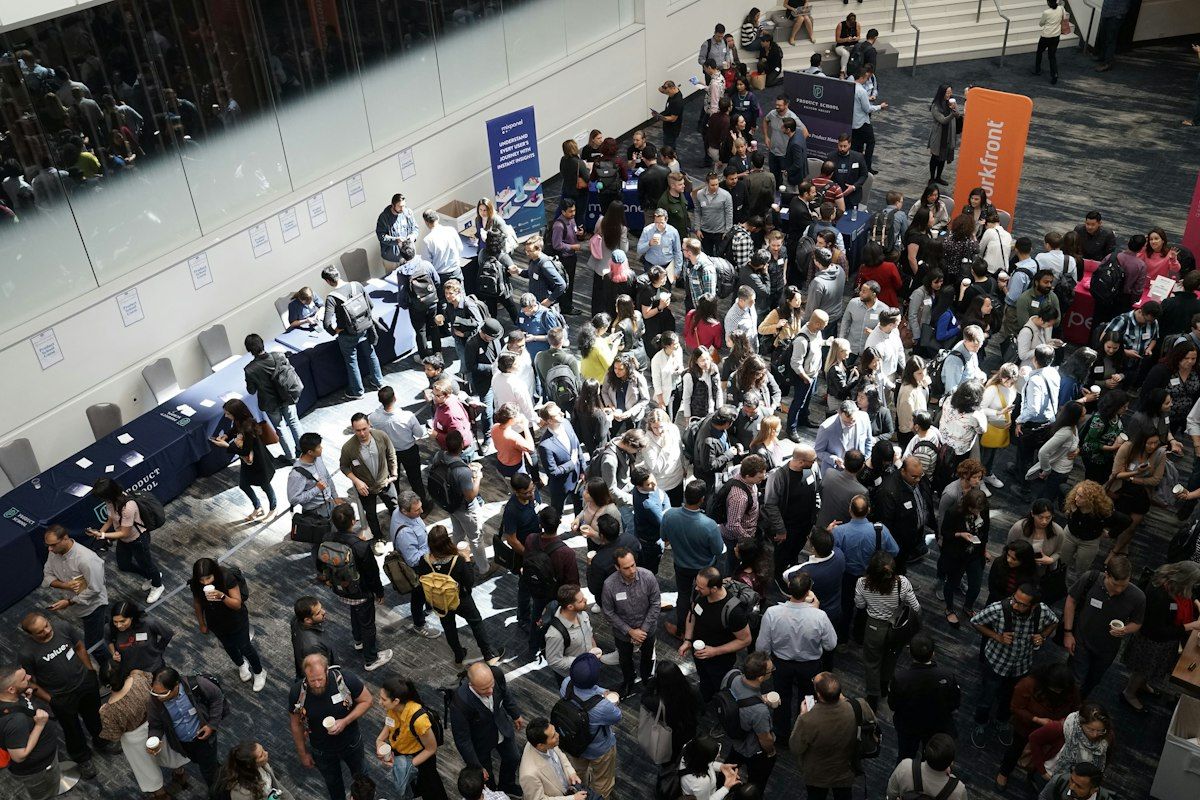
Most Ivy League interviews are conducted by alumni, not admissions officers. Contrary to popular belief, they are not trying to catch you out — they want to leave the conversation excited about meeting you.
Can you have a real conversation about ideas? Do you have opinions?
Do you know who you are, what you want, and why?
Can you articulate specifically why this school, not just “the Ivy League”?
Are you someone the interviewer would genuinely want as a student at their alma mater?
Several Ivy League schools offer need-blind, full-need financial aid to international students, making them genuinely more affordable than many alternatives.
For families who qualify for need-based aid, an Ivy League education can cost less than a private school in your home country. Harvard, for example, has a policy that families earning under $85,000 per year typically pay nothing; families earning $85,000–$150,000 pay proportionally, often less than 10% of their income.
Ivy League schools do not offer merit-based scholarships, all financial aid is need-based — but the generosity of these programmes effectively functions as a full scholarship for many qualifying families.

Harvard University
Need-blind — financial need has no impact on admissions decisions
Princeton University
Need-blind — financial need has no impact on admissions decisions
MIT
Need-blind — financial need has no impact on admissions decisions
Yale University
Need-aware — financial circumstances considered in some cases
Columbia University
Need-aware for international students
UPenn
Need-aware for international students
Brown University
Need-aware for international students
Dartmouth
Need-aware for international students
Cornell
Need-aware for international students
Applying early to Ivy League schools can give you a significant statistical advantage, but only if you do it strategically.
Binding. If you apply Early Decision to a school and are admitted, you are obligated to attend and must withdraw all other applications. Deadline: typically November 1. Notification: mid-December. Used by Columbia, UPenn, Brown, Dartmouth, and Cornell.
At ED schools, the early acceptance rate is often 2–3x higher than regular decision. At SCEA schools (Harvard, Yale, Princeton) the early advantage is more nuanced, but still real.
Tychr’s recommendation: If you have a genuine first-choice school, your application is ready by November, and you are fully prepared to commit, applying early is almost always the right strategic move.
Our admissions process is not a service, it’s a strategy. Here’s exactly how we help students get into the Ivy League, step by step.

Profile Assessment & Strategy Design — Grade 9–10
We assess your current academic profile, extracurricular activities, test score trajectory, and long-term goals, then design a personalised multi-year roadmap. This includes identifying your “spike,” filling strategic gaps, and creating a realistic but ambitious school shortlist.
Profile Building — Grade 10–11
We help you access research opportunities, competitive programmes, internships, and leadership experiences that genuinely strengthen your application. This is where the real differentiation happens — not in the application, but in the years before it.
Academic Optimisation — Ongoing
Our tutors work to ensure your grades and test scores meet and exceed the benchmarks for your target schools, focusing heavily on IB, A-Level, or AP performance, as well as SAT/ACT preparation.
Application Strategy — Grade 12, Sep–Nov
School list finalisation. Early Decision / Early Action strategy. Common App profile optimisation. Activity list positioning — turning a list of experiences into a cohesive narrative.
Essay Development — Where most time is spent
We guide you through brainstorming, drafting, and refining your personal statement and every supplemental essay until each piece is genuinely excellent: specific, authentic, and strategically aligned with your target schools.
Recommendation Strategy — Grade 11–12
We help you identify the right recommenders, give them the context they need to write something specific and compelling, and ensure the letters reinforce your overall application narrative.
Interview Preparation — Fall, Grade 12
Realistic mock interviews, detailed feedback, and coaching on how to present your authentic self with confidence and clarity.
Submission, Waitlists & Decisions — Nov–Apr
Application review and final submission support. If you're waitlisted, we help you write a compelling Letter of Continued Interest. When offers come in, we help you compare and decide.
These aren’t exceptional cases. They’re what happens when the right student meets the right strategy.

Vishaal
IB student, India · Accepted to an Ivy League University (Harvard & Yale applications)
“I signed up with Tychr during my junior year, and from the beginning, they offered highly personalised advice. They didn't just focus on my academics, they helped me identify and pursue summer internships that complemented my interests and gave me real material for my essays. With Tychr's support, I applied confidently knowing my application highlighted my strengths and unique qualities.”
Tychr students have received acceptances to every Ivy League university, as well as MIT, Stanford, Oxford, Cambridge, and dozens of other elite institutions across the US and UK. Our Class of 2028 results include 100+ Ivy League offers.
Absolutely. Every Ivy League school actively recruits international students — they are central to the diversity of perspective that makes these campuses intellectually exceptional. Some schools, like Harvard, Yale, and Columbia, have substantial international student communities. The application process is the same as for domestic applicants, though there are additional considerations around financial aid, standardised testing, and English language proficiency.
Most Ivy League schools currently operate under test-optional or test-flexible policies. However, for international students, particularly those whose academic systems are less familiar to US admissions officers, a strong SAT or ACT score remains a powerful signal. Tychr's general recommendation is to submit scores if they sit at or above the 75th percentile for your target school.
Students whose primary language of instruction is not English are typically required to submit TOEFL or IELTS scores. Most Ivy League schools have minimum score thresholds, though these are usually well below the scores achieved by competitive international applicants.
Ivy League schools look for students in the top academic percentile of their school and system. For IB students, this typically means 40–45 points; for A-Level students, AAA or AAA*. Context matters — schools consider your results within the context of your school and curriculum.
This is one of the most important questions in the process, and one that's almost impossible to answer without expert guidance. Tychr's counsellors help students understand the culture, pedagogy, and community of each school deeply enough to make a genuinely informed choice, not just a prestige-driven one.
The earlier the better. Students who begin in Grade 9 or 10 have the greatest opportunity to build their academic profile, develop meaningful extracurriculars, and approach application season without panic. That said, Tychr also works successfully with students who come to us in Grade 11 or 12.
Counsellors who attended the schools you're applying to. A proven, step-by-step methodology refined over hundreds of successful Ivy League applications. Genuine 1-on-1 mentorship rather than a template-based service. And a track record — 100+ Ivy League offers — that speaks for itself.
We offer several service packages tailored to different stages of the application process and different levels of support. Book a free consultation to understand what's right for your situation, and we'll walk you through all available options.
Book a free, no-obligation Ivy League admissions strategy session with a Tychr expert. Walk away with a clear picture of where you stand, and exactly what you need to do next.
Tychr students have received 100+ Ivy League offers. Let’s make yours the next one.
Tell us where your student is headed. A Tychr counselor will follow up within one business day to map the right path forward.
Whether you’re in Grade 9 mapping your future or in Grade 12 with a deadline looming, Tychr has the expertise, the track record, and the commitment to help you get where you’re going.
The students who get into the Ivy League are not always the most naturally gifted. They are the ones who made the decision, early enough, to treat their application as something worth preparing for seriously. Get in touch with Tychr today, and let’s build your path to an Ivy League offer together.
Book a Free Consultation
Start with a no-obligation strategy call. Walk away with a plan.
Explore Our Services
See the full range of admissions, tutoring, and profile-building programmes.
Read Student Success Stories
See exactly how Tychr students got their Ivy League offers.
Tychr, Expert Ivy League Admissions Counselling for Students Around the World. 100+ Ivy League Offers. 70+ Countries. One Goal: Yours.