Tychr has placed more than 50 students at the University of Melbourne, ANU, UNSW, University of Sydney, and other leading Australian institutions. Our admissions counsellors know exactly what Australian universities look for, and how to build an application that meets it.
Australia's Group of Eight universities are genuinely world-class, research-intensive institutions with strong international recognition, excellent graduate employment outcomes, and campus communities among the most diverse globally.

Australia's top universities offer a combination that few systems can match: research-intensive academic environments, strong global employer recognition, an exceptional quality of life, and one of the most generous post-study work rights schemes in the world.
The University of Melbourne and ANU regularly appear in the global top 50. UNSW, Sydney, and Monash appear in the top 100. Medicine, law, engineering, and environmental science lead globally.
Over 700,000 international students study in Australia annually, creating genuinely global campus communities with established support systems for international arrivals.
The Temporary Graduate Visa (Subclass 485) permits 2–4 years of post-grad work rights in any field, serving as a gateway to professional experience and permanent residency.
Australia's climate, outdoor culture, and quality of life consistently rank among the highest globally, offering a compelling alternative to the UK or US.

World-class research meets unmatched quality of living.
The Group of Eight (Go8) is Australia's coalition of leading research universities, the Australian equivalent of the Ivy League or Russell Group in terms of research intensity and graduate outcomes.
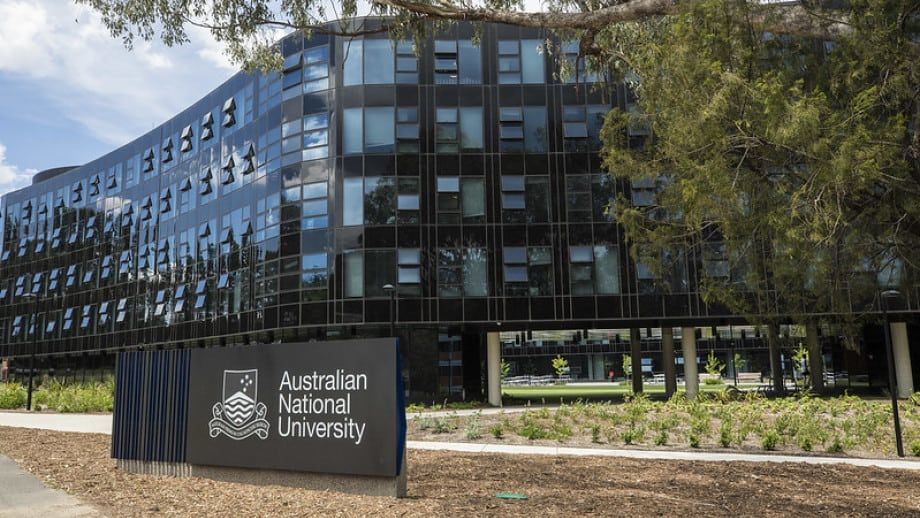 QS Top 35
 QS Top 20QS Top 50
 QS Top 60
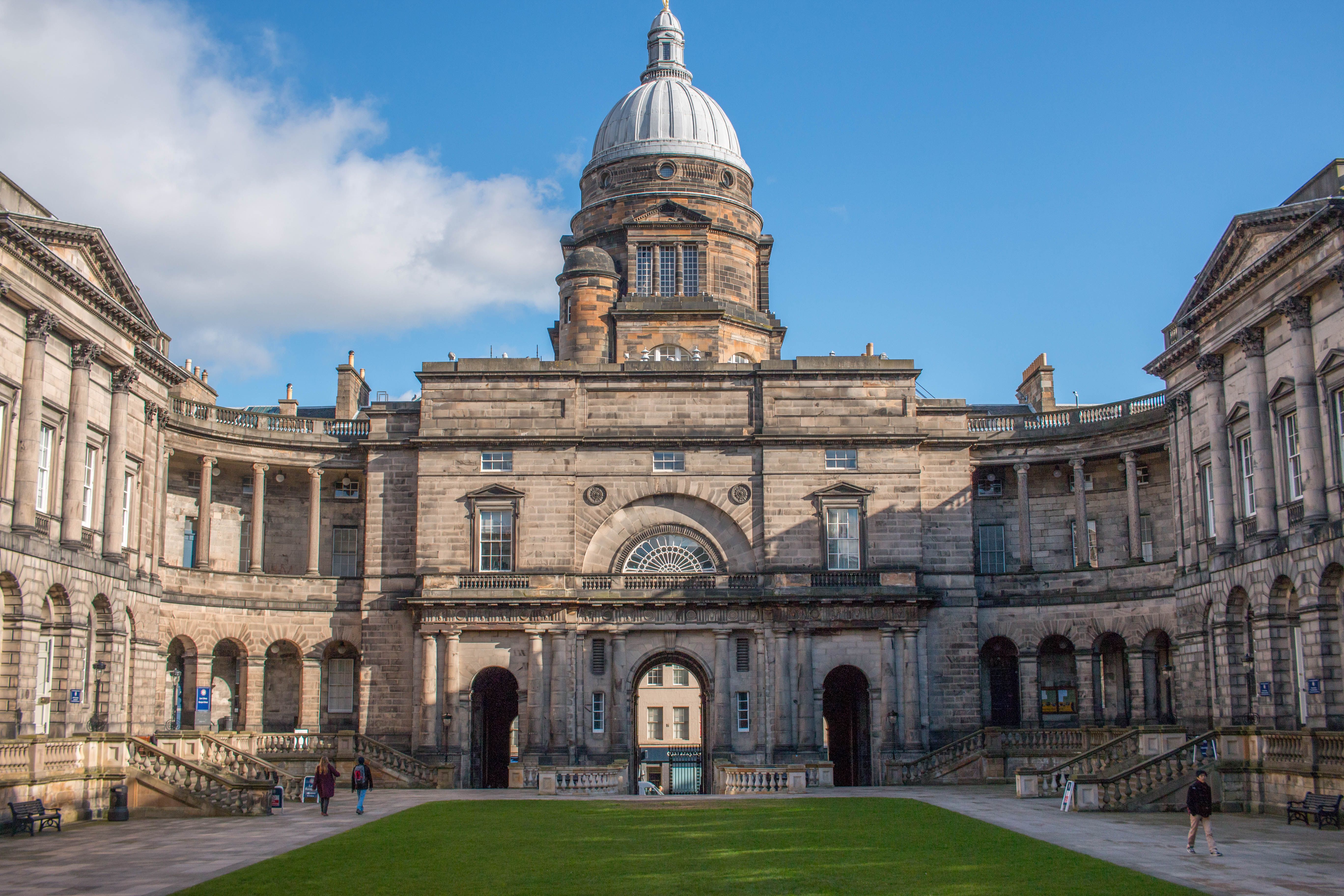 QS Top 100
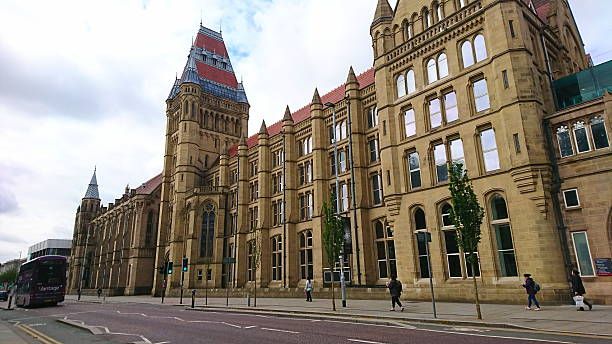 QS Top 100
The University of Technology Sydney (UTS), RMIT, Deakin, and Macquarie are strong universities outside the Go8, particularly in technology, design, and business. Lower entry requirements make them useful match or safety options for many international applicants.
Tychr's Focus: We primarily place students at Go8 institutions, with our strongest record at Melbourne, ANU, UNSW, and Sydney.
Overall rankings tell only part of the story. For international students choosing an Australian university, subject-level rankings are far more useful.
| Academic Field | Top Australian Universities |
|---|---|
| Law | University of Melbourne, University of Sydney, ANU, UNSW |
| Medicine & Health Sciences | University of Melbourne, University of Sydney, UNSW, Monash |
| Engineering | UNSW, Monash, University of Melbourne, UQ |
| Computer Science | ANU, UNSW, University of Melbourne |
| Business / Commerce | UNSW (AGSM), University of Melbourne, Monash |
| Sciences (Bio, Chem, Phys) | ANU, University of Melbourne, UQ |
| Environmental Sciences | ANU, UQ, University of Melbourne |
| Architecture & Design | University of Melbourne, UNSW |
| IR & Politics | ANU (Strongest in Australia) |
| Agriculture | UQ, University of Adelaide |
Melbourne uniquely uses broad undergraduate degrees (Arts, Science, Commerce) followed by graduate professional programmes (Melbourne Law School, Melbourne Medical School). Undergrad degrees here are designed as professional feeder paths.
As Australia's only primarily research-focused national university, ANU holds exceptional strength in policy, international relations, and sciences due to its proximity to Canberra's government infrastructure.
Australian university admissions are primarily grade-based, making them more predictable than US or UK holistic review processes. The primary metric is the ATAR (Australian Tertiary Admissions Rank) or its international equivalency.
| Curriculum | Score | ATAR Equivalent |
|---|---|---|
| IB Diploma | 45 | 99.95 |
| IB Diploma | 42 | ~98.5 |
| IB Diploma | 38 | ~95.0 |
| IB Diploma | 35 | ~90.0 |
| A-Levels | A*A*A* | ~99+ |
| A-Levels | AAA | ~97+ |
| A-Levels | A*AA | ~94+ |
| A-Levels | ABB | ~90+ |
* Conversions vary by state and institution; verify with individual university international admissions.

While grades drive admission, certain specialised courses demand extra testing:
Australian universities are highly experienced in assessing IB, A-Levels, Indian boards (CBSE/ISC), and AP curriculums. Here is what each system requires in practice.
Accepted by all Go8 institutions. General admission starts at IB 30+; competitive fields (Law/Medicine) need IB 38–42+. HL subject choices like Math/Physics (Engineering) or Bio/Chem (Medicine) are crucial.
Converted to ATAR via university lookup tables. AAA converts to ~97–99 ATAR equivalent. Specific subject prerequisites apply: Chem + Bio for Med; Math + Physics for Engineering.
Directly accepted based on Class 12 final board results. Top competitive programmes usually require 90%+ across your best five academic subjects.
Advanced Placement scores are evaluated alongside high school GPA. Scoring 5s in multiple relevant AP subjects alongside an unweighted strong GPA fulfills Go8 criteria.

We precisely map your high school curriculum to match official ATAR conversions before you submit.
International applicants can apply directly through individual university admissions portals. Here is how Tychr guides you through the direct application sequence.
Select 2–4 universities and specific programmes based on your ATAR equivalent, field of interest, and career goals. Unlike UCAS (max 5 choices in one portal), Australian direct applications are submitted separately to each university.
Compile academic transcripts (secondary school), English language test results (IELTS/TOEFL/PTE), official qualification certificates, passport copies, personal statements (if required), and programme-specific documents like UCAT or portfolios.
Each university maintains its own online admissions portal. Applications for the February/March main intake typically run from July through November–December. October intake applications close around July–August.
Conditional offers are issued based on predicted grades. Once final results (IB, A-Level) are verified, official offers are confirmed. Students typically have 2–4 weeks to accept and pay the enrolment deposit.
Once enrolled, the university issues the Confirmation of Enrolment (CoE). This key official document is required to log and process your Student Visa (Subclass 500) application.

Choose Universities & Programmes
Alongside direct university applications, Australia utilizes Tertiary Admissions Centres (TACs) for state-level processing. Here is when to use them versus direct applications.
Primary University Coverage: University of Sydney, UNSW, ANU, University of Newcastle, University of Wollongong
Centralised body for New South Wales and ACT. While some international students apply through UAC, direct applications are most commonly preferred.
For international students targeting Go8 institutions, direct university applications are almost always the optimal route. Tychr manages the complete direct application pipeline.
Australia provides significant financial support pathways, ranging from full government-backed awards to university merit awards worth AUD $10,000–$40,000 annually.
The flagship Australian government scholarship for students from developing nations. Covers full tuition, living allowance, return airfare, and health insurance (~3,000 awards globally per year).
Government funding specifically encouraging study at regional Australian campuses. Less competitive than Australia Awards, helping international students offset study costs outside major capitals.
| University | Scholarship Name | Value |
|---|---|---|
| University of Melbourne | Melbourne Chancellor's Scholarship | Full Tuition |
| ANU | ANU International Excellence Scholarship | Up to $9,000 / year |
| UNSW | UNSW Global Academic Award | 10–25% Tuition Reduction |
| University of Sydney | International Science Scholarship | Up to $40,000 |
| Monash University | Monash International Merit Scholarship | $10,000 / year |
Understanding the full investment: breakdown of annual international tuition fees, city-by-city living costs, visa financial thresholds, and cost comparisons.
| Field / Programme | Annual Tuition (AUD) |
|---|---|
| Arts / Humanities / Social Sciences | $25,000–$35,000 |
| Business / Commerce | $30,000–$45,000 |
| Engineering | $35,000–$45,000 |
| Sciences | $30,000–$42,000 |
| Law (LLB) | $35,000–$50,000 |
| Medicine (MBBS) | $55,000–$75,000 |
| Computer Science | $30,000–$45,000 |
| City | Annual Living Cost (AUD) |
|---|---|
| Melbourne | $20,000–$26,000 |
| Sydney | $22,000–$28,000 |
| Brisbane | $18,000–$24,000 |
| Canberra | $18,000–$22,000 |
| Perth / Adelaide | $16,000–$22,000 |
Australian total costs are broadly comparable to UK Russell Group universities and significantly lower than US Ivy League list prices (before financial aid). For families not qualifying for substantial US aid, Australia represents exceptional value for world-class quality.
The Australian Student Visa requires evidence of sufficient funds to cover tuition plus living costs (official threshold is approximately AUD $24,505 per year). Tychr assists with exact financial documentation verification.
All international students studying in Australia for a course longer than three months require a Student Visa (Subclass 500). This visa is straightforward to obtain for students with a genuine offer of enrolment, demonstrated financial capacity, and basic health and character requirements.
All Group of Eight (Go8) Australian universities mandate documented proof of English proficiency for applicants whose secondary or higher education was not taught in English.
| University | IELTS Academic | TOEFL iBT | PTE Academic |
|---|---|---|---|
| University of Melbourne | 6.5 (no band < 6.0) | 79+ | 58+ |
| Australian National University (ANU) | 6.5 (no band < 6.0) | 80+ | 58+ |
| UNSW Sydney | 6.5 (no band < 6.0) | 90+ | 64+ |
| University of Sydney | 6.5 (no band < 6.0) | 85+ | 64+ |
| Monash University | 6.5 (no band < 6.0) | 79+ | 58+ |
| University of Queensland (UQ) | 6.5 (no band < 6.0) | 87+ | 64+ |
Pearson Test of English (PTE) Academic is universally recognized across Australia. It offers faster turnaround times for results compared to IELTS, making it an ideal choice for fast-tracked applications.
Students completing high school entirely in English (e.g., IB Diploma, UK A-Levels) may qualify for automatic test waivers depending on individual university policies.
Not all international students meet direct entry requirements for Go8 universities immediately. Foundation programmes and diploma pathways provide structured academic preparation designed to bridge entry gaps cleanly.
University-affiliated programs (e.g., Melbourne University Foundation Studies, UNSW Foundation Studies) provide standard 1-year academic preparation for students from non-mapped secondary systems.
TAFE or private college diplomas in specific vocational/academic domains allow direct transfer into Year 2 of selected university degrees with full credit recognition.
We advise students honestly. If direct entry is achievable through score optimization, that is always our primary route. We never recommend foundation courses unnecessarily unless it represents the safest, most reliable strategy for your target Australian university.
Australian universities operate on two primary intake windows: Semester 1 (February/March - Main Intake) and Semester 2 (July/August).
IB results released in early July arrive perfectly for Semester 2 entry with confirmed results—a huge strategic advantage for borderline applicants. However, Tychr recommends applying early for Semester 1 using predicted scores to lock in conditional offers early.
Australia’s Temporary Graduate Visa (Subclass 485) is among the most generous post-study work schemes globally, providing a direct bridge to global work experience and permanent residency.
Graduates with eligible STEM bachelor's or master's degrees can qualify for an additional 2-year extension—enabling up to 4 to 5 years of post-study work authorization.
Australian universities accept IB conversion easily, but specific Higher Level (HL) subjects dictate acceptance into competitive programs. Tychr aligns required HL combinations for Medicine (HL Chem + Bio), Engineering (HL Math + Physics), and Law.
Over 70% of Tychr applicants secure merit scholarships valued between AUD $12,000 – $25,000 through our proactive eligibility mapping.
Homeschooled • Cambridge A-Levels (A*A*A*) • India
Arjun completed his A-Levels in Physics, Mathematics, and Computer Science via Tychr’s homeschooling portal. Tychr facilitated an independent machine learning research paper to augment his application.
We managed his direct admission, IELTS preparation, CoE documentation, and visa filings seamlessly alongside his US Common App submissions.
"The Tychr homeschooling programme gave me the academic foundation. Their Australian admissions guidance handled everything I would never have figured out alone—the ATAR conversion, scholarship applications, and visa."
Possibly not. Students whose recent secondary education was conducted entirely in English may qualify for an English language test exemption at some Australian universities. Each university has its own policy, and most require evidence such as a school letter or transcript confirming that English was the language of instruction.
Yes. Unlike UCAS, which limits applicants to five choices through a single portal, Australian universities generally accept separate direct applications, with no formal limit on the number of universities you can apply to.
IB results are typically released in early July, while A-Level results are published in mid-August. Both are released after the main February intake application deadline but before Semester 2 application deadlines. Students applying for Semester 1 usually submit predicted grades, which are later confirmed or updated once final results are available.
Yes. Australian medical degrees (MBBS or MD) are internationally recognised and offer strong graduate outcomes. However, they are highly competitive, typically requiring a UCAT score and an ATAR-equivalent of around 99+, with annual tuition fees ranging from approximately AUD $55,000 to $75,000. Students planning to practise medicine outside Australia should also confirm that the qualification is recognised in their home country.
The Group of Eight (Go8) comprises Australia's leading research-intensive universities, known for stronger research funding, higher research output, greater international reputation, and generally stronger graduate employment outcomes. Other universities, such as UTS, RMIT, and Macquarie, also provide high-quality education and are often more accessible, particularly in fields like technology, design, and business.
In your free consultation, a Tychr Australian admissions counsellor will assess your IB or A-Level results (or predicted results), map them to ATAR equivalents for your target universities, identify scholarship opportunities, and outline your target institution application timelines.