Tychr's European university admissions service has placed students at Sciences Po Paris, Bocconi, Maastricht, TU Munich, IE University, and other leading EU institutions. Here's how we do it, and how we can help you.
Global Excellence
Navigating multi-system European admissions pathways with tailored strategies.
There is no single "European university system." Each country operates its own higher education framework, with different degree structures, different admissions processes, and different tuition fee arrangements for international students.
Increasingly, European universities offer English-taught programmes at the bachelor's level, Maastricht, Groningen, and Amsterdam are the leaders in the Netherlands; TU Munich has significant English-taught provision; Sciences Po's regional campuses are English-medium. Local-language programmes require proficiency certification (DELF/DALF for French, DSH or TestDaF for German).
No European equivalent of the Common App or UCAS exists. Each institution typically uses its own portal, has its own deadlines, and requires its own documentation set. Coordination across multiple EU applications is genuinely demanding.
Germany and Norway: No tuition fees (or minimal fees) even for international students, a significant financial advantage.
Netherlands: Approximately €2,000–€12,000/year for international students.
France (public): €3,000–€4,500/year; Sciences Po significantly higher.
Italy: Varies by university; Bocconi approximately €14,000/year.
Most European universities use the Bologna Process structure, 3-year bachelor's + 2-year master's, rather than the UK/US 4-year bachelor's model. This affects total programme cost and timeline calculations.

Customized application routes designed for unique European country rules.
Explore key institutional highlights and Tychr's proven track record across premier European institutions.
Social Sciences Flagship
Business & Finance Hub
STEM Global Leader
Engineering & Innovation
PBL Learning Specialist
Entrepreneurship & Tech
Comprehensive Dutch Network

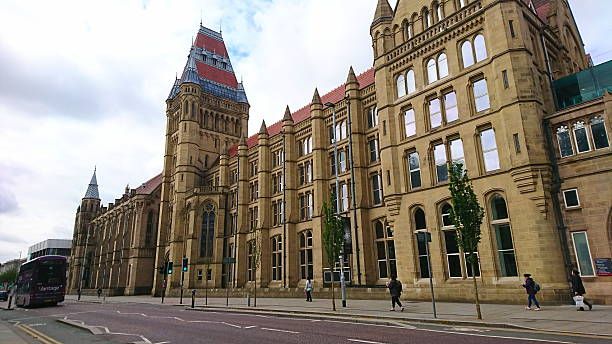
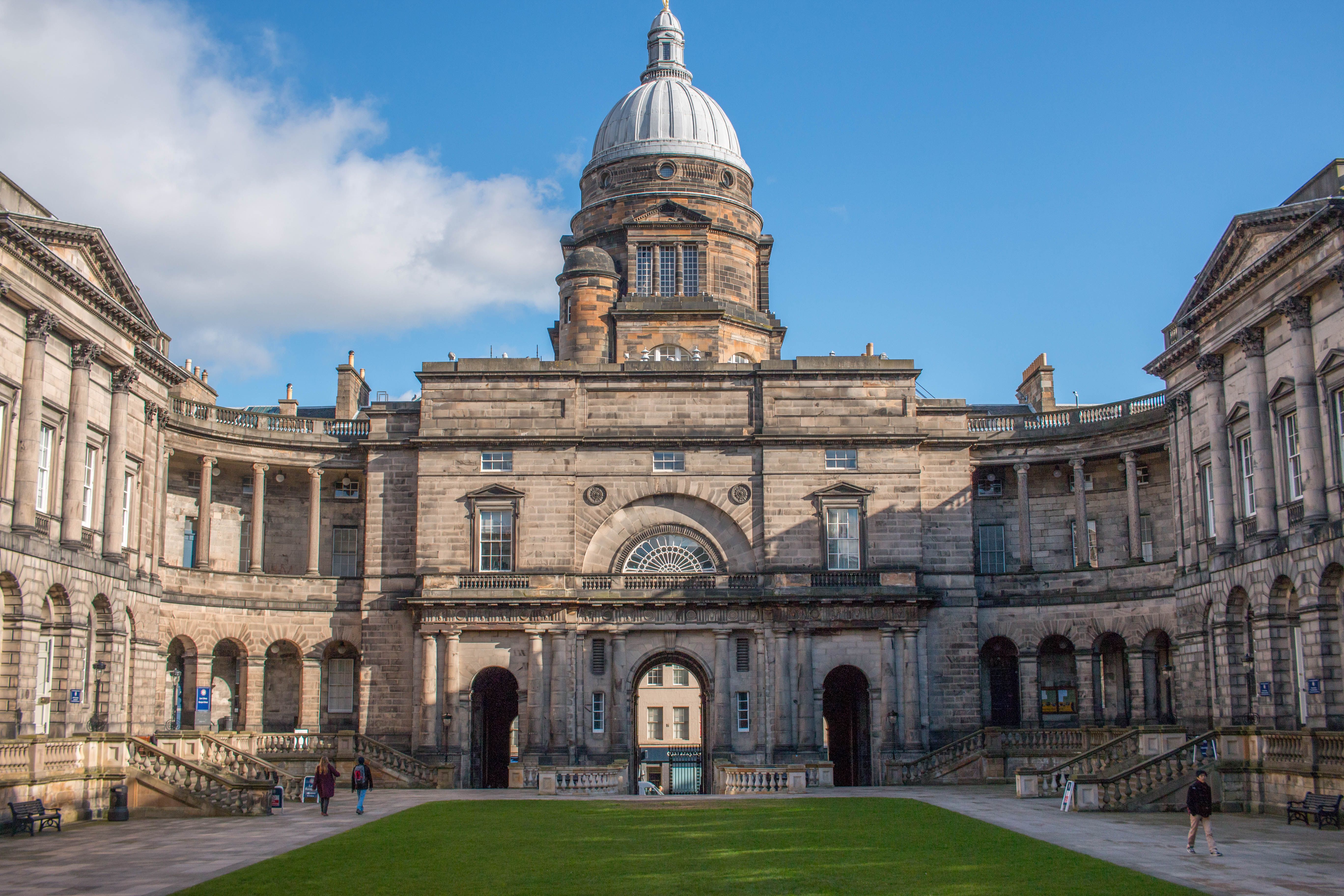



The most prestigious social science institution in continental Europe. Highly international (50%+ international students). English-taught undergraduate programmes at regional campuses (Le Havre, Menton, Poitiers, etc.). Paris campus requires a competitive oral examination for most applicants. Acceptance rate: approximately 20–25% for international applicants, lower for the most competitive programmes.
Multiple annual acceptances including students from Nigeria, India, UAE, and Kenya. Oral examination preparation is the highest-impact Tychr intervention for Sciences Po applicants.
| University | IB Requirement | A-Level Equivalent | Notes |
|---|---|---|---|
| Sciences Po Paris | 36–40+ | AAA–A*AA | Oral examination required |
| Bocconi | 36–40 | AAA | Bocconi Test required |
| TU Munich | 38–42+ | A*AA | Strong Maths/Sciences required |
| ETH Zurich | 40+ | AAA | Swiss Matura or equivalent |
| Maastricht | 32–36 | BBC–AAB | More accessible |
| IE University | 32–36 | BBC–ABB | Interview required |
| University of Amsterdam | 32–36 | BBB–AAB | Programme-dependent |
Most English-taught programmes require IELTS 6.5–7.5 or TOEFL 90–100+.
The absence of a unifying platform is the biggest practical challenge in European university applications. Each school requires its own approach.
For students applying to multiple EU institutions simultaneously, Tychr manages the coordination of deadlines, documentation, and application-specific requirements, ensuring nothing is missed across what is genuinely the most logistically complex application system in global higher education.
Language strategy is fundamental to European university admissions, both for accessing English-taught programmes and for opening doors to local-language study.
IELTS Academic or TOEFL scores are required by most English-medium European programmes. Typical thresholds:
Sciences Po's Paris campus bachelor's programmes require French language competency, DELF B2 minimum, C1 preferred. French-language preparation alongside the application is essential for students interested in the Paris campus.
TU Munich and other German universities require TestDaF (Niveau 4 in all sub-tests) or DSH for German-taught programmes. German B2/C1 level is effectively the minimum. Students without prior German study who want to access Germany's fee-free university system should begin German language preparation 12–18 months before application.
Tychr advises students on whether language investment (French or German) is worthwhile given their broader university goals, accounting for the time investment against the financial benefit (free German tuition) or prestige benefit (Sciences Po Paris campus).
| Country / School | Tuition (Annual) | Living Costs | Total / Year |
|---|---|---|---|
| Germany (public) | €0–€1,500 | €10,000–€14,000 | ~€12,000–€15,000 |
| Norway (public) | €0 | €15,000–€18,000 | ~€15,000–€18,000 |
| Netherlands | €6,000–€12,000 | €10,000–€14,000 | ~€16,000–€26,000 |
| Sciences Po Paris | €13,000–€15,000 | €12,000–€16,000 | ~€25,000–€31,000 |
| Bocconi (Milan) | €14,000 | €12,000–€15,000 | ~€26,000–€29,000 |
| Spain (IE) | €18,000–€24,000 | €10,000–€13,000 | ~€28,000–€37,000 |
| Switzerland (ETH) | ~€1,400 | €20,000–€25,000 | ~€21,000–€26,000 |
Even the most expensive European institutions (Sciences Po, Bocconi) cost approximately one-third of the comparable US or UK private university alternative. German universities, with essentially zero tuition, represent one of the best educational value propositions in the world, if the student has the German language or can access English-taught programmes.
European scholarships for international students are more limited than US need-based aid but more accessible than the competition-based UK system.
The German Academic Exchange Service (DAAD) offers the most extensive international student scholarship programme in Europe. Most DAAD scholarships are for postgraduate study, but a small number target exceptional undergraduate applicants. DAAD scholarships include a monthly stipend and health insurance.
A competitive scholarship programme for non-EU students studying in the Netherlands. €5,000 for the first year of a bachelor's or master's programme. Administered through Dutch universities.
Sciences Po offers need-based bursaries for low-income students, including international students. Financial support is available for students who qualify, the application is submitted alongside the admissions application.
The EU's Erasmus+ programme funds student mobility within Europe, primarily relevant after initial enrolment. Additionally, many governments offer scholarships for citizens studying in Europe. Tychr maintains awareness of major national programs.
Every EU admissions programme at Tychr includes a scholarship identification consultation, identifying relevant scholarships by country of origin, intended field, and target institution.
Germany is one of the most compelling options in global higher education for international students, exceptional research universities, no tuition fees for most programmes, and strong employment outcomes in Europe's largest economy.
| University | Location | Strengths | English Provision |
|---|---|---|---|
| TU Munich | Munich | Engineering, CS, Sciences | Strong English master's; some bachelor's |
| LMU Munich | Munich | Medicine, Sciences, Humanities | Limited English bachelor's |
| Heidelberg | Heidelberg | Medicine, Sciences, Humanities | Limited English bachelor's |
| Humboldt Berlin | Berlin | Humanities, Social Sciences | Limited English bachelor's |
| RWTH Aachen | Aachen | Engineering | Some English programmes |
Most bachelor's programmes at German universities are taught in German. Students who want to access German universities at bachelor's level need German B2–C1 (TestDaF 4 in all components).
Admissions process requires academic transcripts with certified translations, APS certificate (where applicable), and direct application via uni-assist or portal. Academic results are the primary criterion.
Tychr's German university advisory covers language preparation strategy, transcript translation and certification, and TU Munich application support (the most competitive German institution for international STEM applicants).
The Netherlands has the most developed English-taught undergraduate landscape in continental Europe, making it the most accessible European destination for international students who don't speak a local language.
| University | Location | Strengths | Acceptance Rate |
|---|---|---|---|
| University of Amsterdam | Amsterdam | Social Sciences, Humanities, Sciences | ~40–55% |
| Leiden University | Leiden/The Hague | Law, International Relations, Sciences | ~40–55% |
| Utrecht University | Utrecht | Sciences, Medicine, Humanities | ~50–60% |
| Maastricht University | Maastricht | Business, Law, Psychology (PBL) | ~50–65% |
| Erasmus University | Rotterdam | Economics, Medicine, Business | ~45–55% |
| TU Delft | Delft | Engineering, Architecture | ~50–60% |
Maastricht University's Problem-Based Learning model is genuinely distinctive, all learning happens in small group tutorials working through cases, not lectures. Students who thrive at Maastricht are those who enjoy collaborative, discussion-led learning.
Cost: International tuition ~€6,000–€12,000/year; Living ~€10,000–€14,000/year. Significantly less than UK/US alternatives.
Studielink: The Dutch application portal, similar in function to UCAS but for the Netherlands only. Applications through Studielink, supplemented by institution-specific documentation.
France's higher education system balances accessible public universities with highly selective Grandes Écoles. For international undergraduates seeking world-class social sciences, Sciences Po is the premier global entry point.
The most prestigious Sciences Po campus offering a Bachelor's in Social Sciences. Primarily French-language with select English content. Features a rigorous 1-hour oral entrance examination (argument construction and defense in French). Top EU placement tier.
Located in Le Havre, Menton, Poitiers, Reims, Nancy, and Lyon. Offers full English-medium undergraduate programs in international studies, European affairs, and Middle Eastern studies. Application is via motivation letter and academic transcripts—no Paris oral exam required. Tychr has placed students here from Nigeria, India, UAE, and Kenya.
For Paris campus applicants, Tychr provides 4 to 6 intensive mock oral examination sessions. We train students to construct and defend social science arguments under time pressure with live examiner challenge. Students completing this prep consistently outperform candidates.
Sorbonne University excels in humanities and sciences (primarily French-taught). HEC Paris leads elite European business education (primarily postgraduate). Sciences Po remains Tychr's primary recommendation for ambitious international undergraduates.
Paris campus candidates undergo a grueling 1-hour viva examination requiring real-time social science argument defense. Tychr's structured mock program ensures complete preparedness under examiner pressure.
From business heavyweights like Bocconi and IE University to world-class research hubs in Sweden and Belgium, Europe offers specialized English-taught programs.
IE University (Madrid) is Spain's flagship private university for business, technology, and law. Fully English-taught, moderately selective, interview-based. University of Navarra offers strong Medicine and Theology programs.
Bocconi (Milan) is Italy's premier target for business, economics, and law. Requires the Bocconi Test and offers deep pipelines into European finance. Other Italian universities remain primarily Italian-taught.
Offers high-quality English-taught programs. KTH leads in Engineering, while Lund and Uppsala cover broad academic disciplines. Non-EU tuition ranges between €9,000–€18,000/year.
KU Leuven is Belgium's leading research institution, particularly renowned for Sciences and Medicine with growing English-taught undergraduate offerings.
European deadlines overlap directly with US Regular Decision and UCAS timelines. Managing rolling intakes alongside strict January cutoffs requires synchronized multi-system planning.
| Institution | Opens | Deadline | Notification |
|---|---|---|---|
| Sciences Po (Paris Campus) | October | January | March–April |
| Sciences Po (Regional Campuses) | October | January–February | March–April |
| Bocconi University | November | January | March–April |
| TU Munich (Winter Semester) | October | January–March (varies) | April–May |
| Maastricht University | October | Rolling (Apply early) | Rolling |
| University of Amsterdam | October | Jan 15 (Scholarship) / Apr 1 (Gen) | May–June |
| Leiden University | October | January 15 | April–May |
| IE University | October | Rolling (Rounds Dec & Feb) | Rolling |
Tychr builds a single coordinated calendar to sequence essays, admissions tests, and Studielink/Campus France submissions—eliminating critical January rush risks.
Schengen rules apply widely, but visa execution remains strictly national. Here is how requirements break down across key study destinations.
European universities act as major launchpads into international institutions, European finance, and global tech empires.
Direct pathways to international organizations (UN, EU institutions, World Bank), diplomacy, journalism, and consulting. French government and European institutions heavily recruit from the Paris campus.
Target recruiting from European investment banks (Deutsche Bank, Goldman Sachs, Mediobanca) and MBB consulting firms (McKinsey, BCG, Bain). Premier pipeline to top global MBAs.
Unrivaled industrial connection with European engineering giants like BMW, Siemens, SAP, and Bosch. Tech graduates enjoy rapid job absorption across Europe.
The EU Blue Card Advantage: Non-EU graduates who secure qualifying job offers above salary thresholds gain streamlined work rights across most EU member states—a fast track utilized by Sciences Po and Bocconi alumni within 1–2 years of graduation.
Every placement reflects direct program mastery, strategic application positioning, and focused interview preparation.
"Completed Tychr's 6-session oral exam prep & 3 rounds of motivation letter development. Admissions cited her oral defense as 'exceptionally well-prepared.'"

"Combined targeted Bocconi Test coaching with structured motivation letter development for Business Administration entry."

"Managed Studielink and motivation letters in parallel with US applications as a primary European backup strategy."
Yes. Many Tychr students apply across multiple systems at the same time. The main challenge is deadline overlap, as most European university applications are due in January–February, coinciding with US Regular Decision and the UCAS standard deadline. Managing all three systems is demanding but entirely feasible with a well-structured application calendar, which Tychr helps students create.
Yes, particularly from leading institutions such as Sciences Po, Bocconi, and ETH Zurich. These universities are highly respected within their professional fields. Recognition varies by region and industry—for example, LSE may carry stronger brand recognition in UK law or US finance, while Bocconi is exceptionally well regarded in European finance and consulting.
Not if you are applying to an English-taught programme. However, local-language programmes, including many bachelor's degrees in Germany, France, and Italy, generally require proficiency at the B2–C1 level. Sciences Po Paris requires French, while several regional Sciences Po campuses offer programmes taught entirely in English.
Most EU countries require international students to obtain a student visa or residence permit for programmes lasting more than 90 days. Many countries also provide post-study work opportunities, including Germany (18 months), France (12 months), and the Netherlands (12 months), making Europe an attractive destination for students planning to work after graduation.
European universities generally do not offer institutional need-based financial aid on the same scale as top US universities such as Harvard, Princeton, or MIT. However, tuition fees are often much lower, with countries like Germany and Norway offering nearly free education at public universities. As a result, the overall cost of earning a European degree is typically 30–50% lower than studying at a comparable private university in the US or UK, even without scholarships.
Book a free consultation with Tychr's European admissions specialist, and leave with a specific shortlist, a clear application plan, and honest guidance on which EU institutions are the right fit for your profile.
European university admissions rewards students who understand the specific culture, requirements, and competitive landscape of each institution. Tychr's EU admissions counsellors bring direct knowledge of Sciences Po, Bocconi, TU Munich, Maastricht, and the broader EU landscape, from oral examination preparation to Bocconi Test coaching to motivation letter strategy.
Tell us where your student is headed. A Tychr counselor will follow up within one business day to map the right path forward.