Tychr's complete Oxbridge admissions guide: the college system, admissions tests, personal statements, interviews, and the specific preparation that turns exceptional students into Oxford and Cambridge offer holders.
The defining feature of Oxford and Cambridge undergraduate education is not their research output, their rankings, or their famous alumni. It is the tutorial (Oxford) and supervision (Cambridge) system — a mode of teaching with no equivalent in higher education globally.
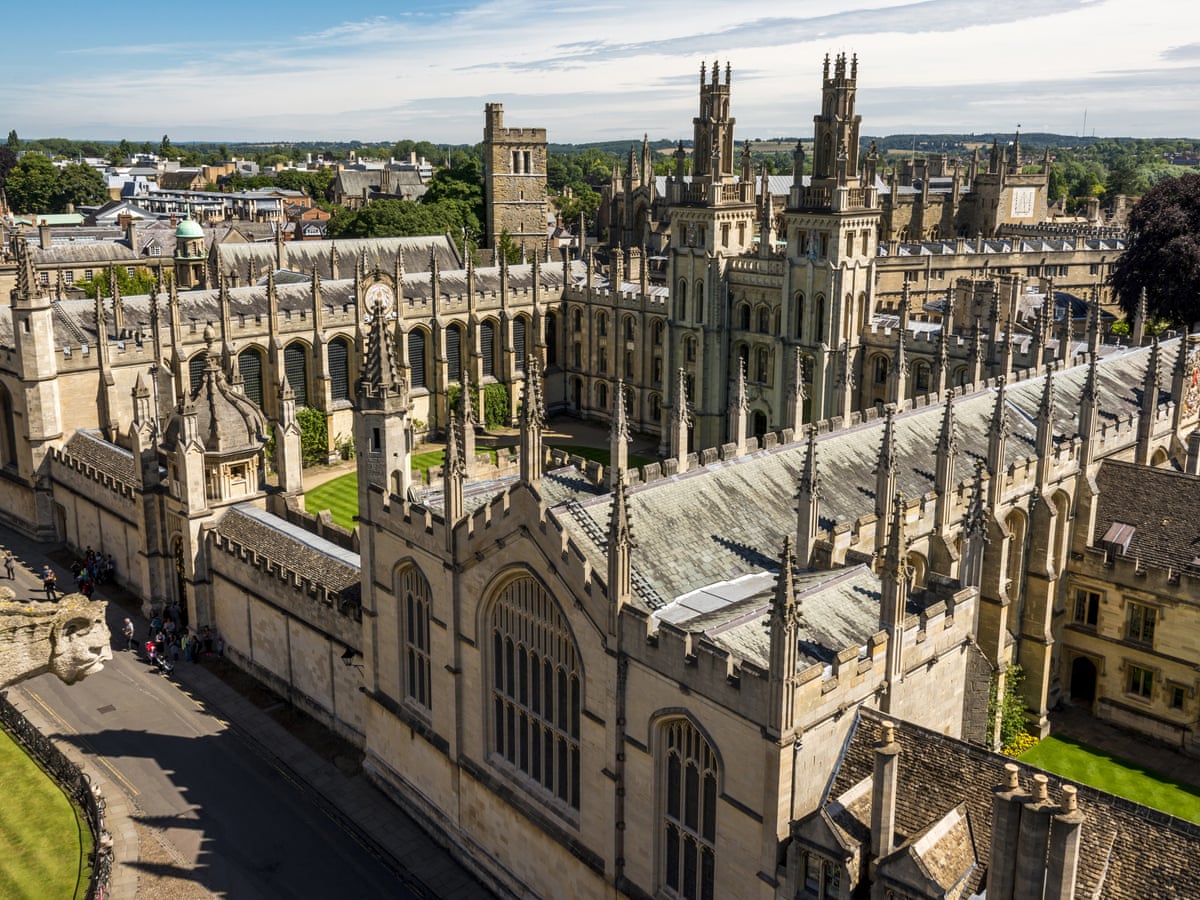
Every week (or fortnight), an undergraduate meets their college tutor — a world-leading academic — in a group of one or two. The tutor reads the prepared essay or problem set, challenges it, and engages in an hour-long Socratic dialogue that pushes the student to defend, develop, or abandon their position. There is nowhere to hide.
Structurally similar — small group meetings (typically 1–3 students) with a subject expert, often a postdoctoral researcher or faculty member. The intensity is comparable to Oxford's tutorial system, though the pace of learning may differ by subject.
What this means for applicants
The tutorial system is why the Oxbridge interview exists. If you are going to spend three or four years in intense one-on-one academic dialogue with expert tutors, the admissions process needs to establish that you can engage productively in that environment — not just that you have achieved high grades. Graduates across law, medicine, policy, finance, and academia carry the analytical and communicative capabilities the tutorial system builds.

| Factor | Oxford | Cambridge |
|---|---|---|
| Terminology | Tutorial system | Supervision system |
| Academic year | Three 8-week terms (Hilary, Trinity, Michaelmas) | Three 8-week terms (Lent, Easter, Michaelmas) |
| Course structure | More flexible at some faculties | More structured, linear progression |
| Subject strengths | PPE, Law, Classics, Medicine, English | Natural Sciences, Mathematics, Engineering, Computer Science |
| Sciences structure | Individual science degrees (Chemistry, Physics, Biology) | Natural Sciences — all sciences in Year 1, specialise later |
| Interview intensity | Very high, academic problem-solving | Very high, subject-specific engagement |
| Campus feel | College clusters across medieval city | "The Backs" central; compact college area |
| Nightlife / social | Active; student unions by college | Active; Cambridge Union famous |
| College system | 38 colleges + 6 permanent private halls | 31 colleges |
When to choose Oxford
PPE, Law, English, History, Classics, Medicine (clinical), Geography, Archaeology — or if you prefer a more flexible course structure in the humanities.
When to choose Cambridge
Natural Sciences (to defer specialism), Mathematics, Engineering, Computer Science, Economics, Veterinary Medicine.
The UCAS rule
You may apply to only one of Oxford or Cambridge in a given UCAS cycle. Exceptions exist for some Medical applicants, but the general rule is firm.
Every Oxbridge applicant applies to a specific college, not just to "Oxford" or "Cambridge." The college is where you will live, eat, be taught, and have much of your social life. Each college is a semi-autonomous institution with its own endowment, governance, dining hall, library, and accommodation — admission decisions are made at the college level, though the pool system lets strong applicants from oversubscribed colleges be considered by others.
Open applications
Genuinely uncertain? Submit an "open application" and the university allocates you to a college — a legitimate option if you have no real preference.
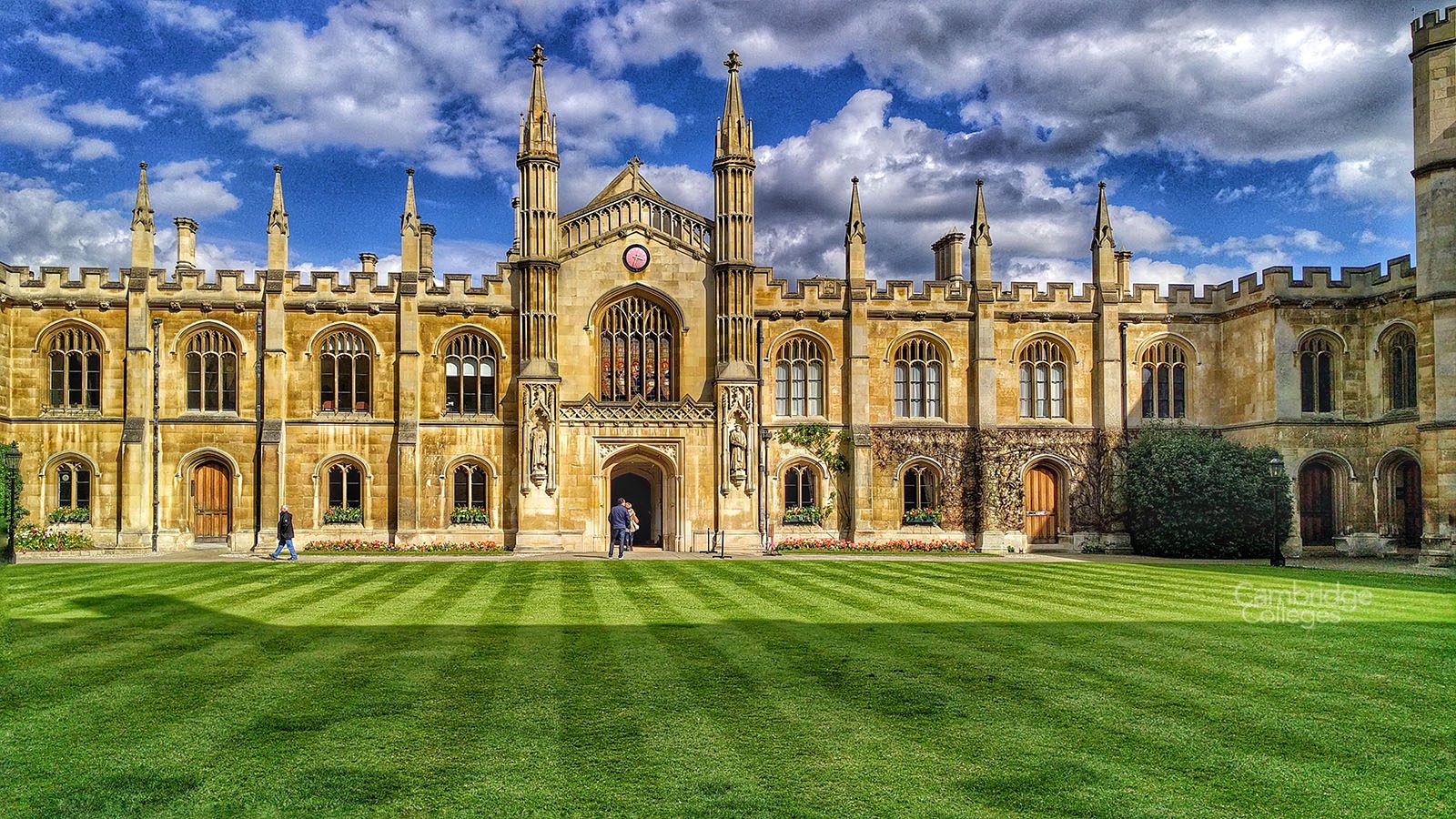
College choice affects
College choice does NOT affect
Oxford — Acceptance Rates by Subject (Approx.)
| Subject | Applications | Acceptance |
|---|---|---|
| Computer Science | ~1,000 | ~12% |
| Engineering Science | ~1,400 | ~16% |
| Mathematics | ~2,000 | ~12% |
| PPE | ~2,000 | ~10% |
| Law | ~2,000 | ~14% |
| Medicine | ~1,500 | ~12% |
| English | ~1,600 | ~20% |
| History | ~1,400 | ~20% |
| Physics | ~1,400 | ~16% |
| Chemistry | ~1,200 | ~20% |
| Economics | ~1,400 | ~14% |
Cambridge — Acceptance Rates by Subject (Approx.)
| Subject | Acceptance |
|---|---|
| Natural Sciences | ~14% |
| Mathematics | ~12% |
| Engineering | ~16% |
| Computer Science | ~10% |
| Economics | ~16% |
| Law | ~14% |
| Medicine | ~10% |
| English | ~20% |
| History | ~18% |
International students represent approximately 20–25% of Oxford and Cambridge undergraduates. Competition for international places is intense, and the academic threshold is the same regardless of nationality.
| Course Type | Oxford A-Level | Oxford IB | Cambridge A-Level | Cambridge IB |
|---|---|---|---|---|
| STEM (Maths, Physics, Engineering) | AAA – AAA* | 40–42 (776 HL) | AAA – AAA* | 40–42 (776 HL) |
| Medicine | AAA – AA*A | 39–41 | A*AA | 40–42 |
| Humanities (Law, History, English) | AAA – AA*A | 38–40 | AAA – AA*A | 38–40 |
| PPE / Economics | AAA – AA*A | 38–40 | AAA | 40–42 |
Oct 15
6pm UK time — not negotiable
Oxford and Cambridge applications must be submitted through UCAS by 6pm UK time on October 15 — approximately 3.5 months before the standard UCAS deadline. Late applications are not considered.

Complete by October 15
After submission
Admissions test registration (MAT, LNAT, PAT, UCAT) is often due by the same October 15 date or earlier. Tychr builds a testing calendar for every Oxbridge applicant so no deadline is missed.
Evaluated against one narrow question: does this applicant demonstrate the intellectual depth and genuine engagement with this subject that would make them worth interviewing?

What tutors are looking for
What to avoid
Most Oxford and Cambridge courses require an admissions test taken before interview shortlisting — performance on these tests is often the primary shortlisting criterion.

| Test | Used For | Format | Key Notes |
|---|---|---|---|
| MAT | Oxford Mathematics, CS, Physics | 2.5 hrs; long-form problems | Requires deep, proof-level thinking |
| TMUA | Cambridge Maths, Cambridge Engineering | 2 papers; MCQ + proof-based | Being phased in more broadly |
| LNAT | Oxford & Cambridge Law + other RG law schools | Multiple choice + essay | Critical reading + legal-style argument |
| PAT | Oxford Physics, Engineering Science | 2 hrs; mathematical physics | Heavy on applied maths & physical reasoning |
| BMAT | Some Cambridge Medicine; phasing out | Science, maths, writing | Check current requirements — in transition |
| UCAT | UK Medicine incl. Cambridge some years | MCQ; 5 sections | Decision-making, quantitative, verbal reasoning |
| TSA | Oxford PPE, Philosophy, Economics; some Cambridge | Critical thinking + problem-solving | Analytical reasoning, no specific knowledge required |
| ELAT | Oxford English | Close-reading essay on unseen texts | Being revised/reinstated — check current status |
Each test requires specific, targeted preparation — general academic ability does not automatically translate to high test scores. Tychr provides admissions test coaching for every Oxbridge test, typically starting 8–12 weeks before the test date.
Not a personality interview, not a motivation check — a window into how you think, how you engage with an unfamiliar intellectual problem in real time.

The Science Interview
A problem is placed in front of the student — a diagram, a physics scenario, a mathematical proof, a biological mechanism. The tutor watches how the student approaches it, asks guiding questions, and probes their understanding of why the approach works.
The Humanities Interview
A passage, quotation, poem, or argument is presented. The student interprets, critiques, or challenges it, and the tutor pushes back, introducing new considerations in real dialogue.
The key skill is thinking aloud productively. The student who says "I'm not sure about this, but let me think through what I do know..." and works carefully toward a reasoned position impresses. Tychr's interview preparation runs 4–6 mock sessions — including at least two with genuinely unseen problems in the student's subject — with written feedback after every session.
Applications are identical — same UCAS timeline, same personal statement, same tests, same interview process. There is no separate international pathway, and the academic threshold is the same as for domestic applicants.
Financial considerations
International fees run approximately £28,000–£39,000/year, subject-dependent. Support for international undergraduates is limited; most major scholarships (Rhodes, Gates Cambridge) are postgraduate.
Available bursaries
Oxford's Crankstart Scholarship (means-tested, some international eligibility), college-level bursaries, and some course-specific support. Cambridge Bursary has limited international eligibility — check current policy.
The Student visa
A Student visa is required. The CAS is issued after accepting the offer. Graduate route (post-study work) eligibility applies after graduation — 2 years for undergraduates.
Practical adjustment
The academic environment is intense and immersive. Students from very different educational systems often find the first term of the tutorial/supervision system a real adjustment.
Mathematics
Engaging with mathematical ideas beyond the curriculum for pleasure — STEP prep (Cambridge), MAT prep (Oxford), AMC/AIME competition experience, reading popular mathematics (Gowers, Hardy). Interviews require proof-level thinking above the school curriculum.
Sciences / Natural Sciences
Reading beyond the textbook — popular science, accessible papers, the history and philosophy of science. Understanding experimental design. Organic mechanisms beyond A-Level for Chemistry; mathematical modelling comfort for Physics.
Medicine
Clinical work experience (shadowing, healthcare volunteering). UCAT preparation, typically 8–12 dedicated weeks. Strong Chemistry and Biology background. Genuine reflection on what it means to work as a physician.
PPE / Economics
Reading economics and philosophy beyond the curriculum — introductory texts, opinion journalism, academic papers on policy. Interviews probe economic reasoning; there is no formal MAT equivalent.
Law
LNAT preparation (critical reading, essay writing). Reading beyond the curriculum — cases, legal philosophy (Hart, Rawls), current controversies. Interviews test constructing and defending arguments in unfamiliar scenarios.
English / History
Reading significantly and specifically, not just widely. Genuine, defensible opinions about texts and historical arguments. The ability to engage in disagreement with a tutor without capitulating or refusing the alternative.
| Oxford tuition (2024–25) | £28,950–£39,010/yr |
| Cambridge tuition (2024–25) | £24,507–£63,990/yr |
| Living costs (either) | ~£12,000–£15,000/yr |
Medicine sits at the higher end of the Cambridge range for pre-clinical/clinical years.

Oxford
Cambridge
The Honest Picture
Substantial financial support for international undergraduates at Oxbridge is limited. Most come from families who can support the full cost, have received scholarships from their home country's government, or have accessed specific college bursaries. Tychr counsellors are aware of major scholarship programmes by country and advise on those applications alongside the university admissions process.
Oxbridge life is uniquely shaped by the college system — understanding this before applying helps students choose the right college and set realistic expectations.

Academic intensity
More concentrated term times than most universities (8 weeks per term), with significant independent-study and preparation expectations. Students without genuine academic engagement find the pace challenging.
The college experience
Formal halls, college bars, sports teams, chapel choirs, and college-specific traditions are central to social life — relationships with tutors and peers are often closer and more formative than at larger universities.
University-wide societies
The Oxford Union and Cambridge Union, the Bodleian Library, the Fitzwilliam Museum, and a vast range of sports, arts, political, and religious societies at the university-wide level.
The city environments
Oxford (~150,000 people) is compact, walkable, architecturally extraordinary. Cambridge (~130,000) has a similarly distinctive character. Both carry a genuinely affecting sense of history.
International student experience
International students represent a significant minority of the student body at both institutions. The college system can accelerate integration — sharing a hall, a bar, and a common room with around 300 people of your college makes community-building faster than at larger, more anonymous universities.
Oxford — PPE, Physics, Chemistry, History, Law, Mathematics, Medicine, Philosophy, Computer Science · Cambridge — Natural Sciences, Mathematics, Economics, Engineering, Law, Medicine

Giulia
Accepted to University of Cambridge · A-Level student, India
"Tychr's approach to my Cambridge preparation was the most thorough and specific guidance I've ever received. My mock supervisions changed how I thought about responding to questions in real time. I went into my interview knowing how to think aloud productively. I got an offer from Cambridge."

Liam
Accepted to Oxford (Physics) · A-Level student, UK
"My PAT preparation with Tychr was essential. My school had almost no preparation for this kind of applied mathematical physics. My tutor knew the PAT format specifically. My interview was almost exactly what the mocks had prepared me for. Accepted to Oxford Physics."

Trusha
Accepted to University of Oxford · IB student, International
"Tychr's school matching process was incredibly insightful. They understood what I wanted from my university experience and guided me toward Oxford. The personal statement coaching made me a genuinely stronger academic writer, not just a stronger applicant."

Nadia
Accepted to Oxford (PPE) · IB student, Nigeria
"The TSA preparation with Tychr demystified the test completely. My interview preparation, six mock sessions, was the most intensive and useful preparation I did in Year 13. I felt genuinely ready. I was offered a place to read PPE at Oxford."
In most cases, no — UCAS prohibits applying to both in the same cycle. The exception is Medicine applicants, who may be permitted to apply to one Oxford/Cambridge medical school and one from the other in some circumstances. Check current UCAS guidance.
College choice affects where you live, who your tutors are, and your social environment, but does not determine the quality of your degree. The pool system means strong applicants rejected by an over-subscribed college may be reallocated to another.
Schools vary enormously in their knowledge of and preparation for Oxbridge admissions tests. Many students, particularly at international schools, receive no meaningful guidance on MAT, LNAT, PAT, or TSA. This is precisely the gap Tychr's Oxbridge preparation programme fills.
Personal statement work should begin June–July of Year 13. Admissions test preparation should begin September–October. Interview preparation should begin as soon as an invitation is received. Earlier on, the priority is super-curricular reading — this starts in Year 11 or 12.
Approximately 55–60% of Oxford students and 60–65% of Cambridge students are from state schools (UK domestic data). Both universities have active widening access programmes. For international students, this distinction is less relevant — the academic threshold applies equally.
60 minutes with a Tychr Oxbridge specialist — a specific plan covering college selection, personal statement approach, admissions test preparation, and interview readiness.
Tychr — Oxford and Cambridge offers across Sciences, Humanities, Law, Medicine & Social Sciences. Every year.
Tell us where your student is headed. A Tychr counselor will follow up within one business day to map the right path forward.
Every Tychr student who received an Oxbridge offer started with the same combination: genuine academic ability, specific preparation, and the confidence that comes from knowing exactly what the process demands. We provide the latter two.
📞 +91 88250 12255
📧 contact@tychr.com
🌐 unicounselling.tychr.com
Tell us where your student is headed. A Tychr counselor will follow up within one business day to map the right path forward.