Tychr's complete guide to the eight Ivy League universities — acceptance rates, admissions requirements, academic strengths, campus culture, and how to build an application that actually gets you in.
The Ivy League is a formal athletic conference comprising eight private research universities in the northeastern United States. The term originated in the 1950s as a reference to this conference, but has since become synonymous with elite higher education globally.
In most parts of the world, an Ivy League degree communicates academic excellence without needing context. This network effect is real and durable.
All eight are leading research universities with billions in endowment funding access to research facilities, faculty, and resources few institutions can match.
The interconnectedness of Ivy League alumni networks in finance, law, medicine, government, and technology remains unparalleled.
Harvard Law, Wharton, Harvard Business School, Columbia Law, Yale School of Management — the professional school ecosystem amplifies the undergraduate brand further.
The Ivy League is a starting point for remarkable opportunities — what a student does with those opportunities is still up to them.
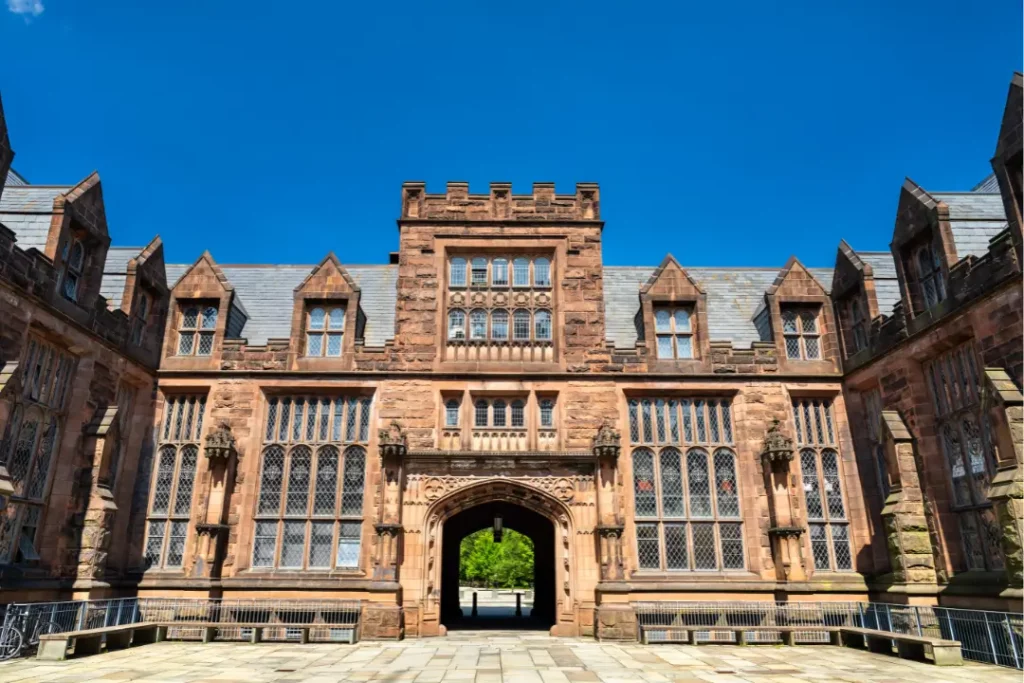


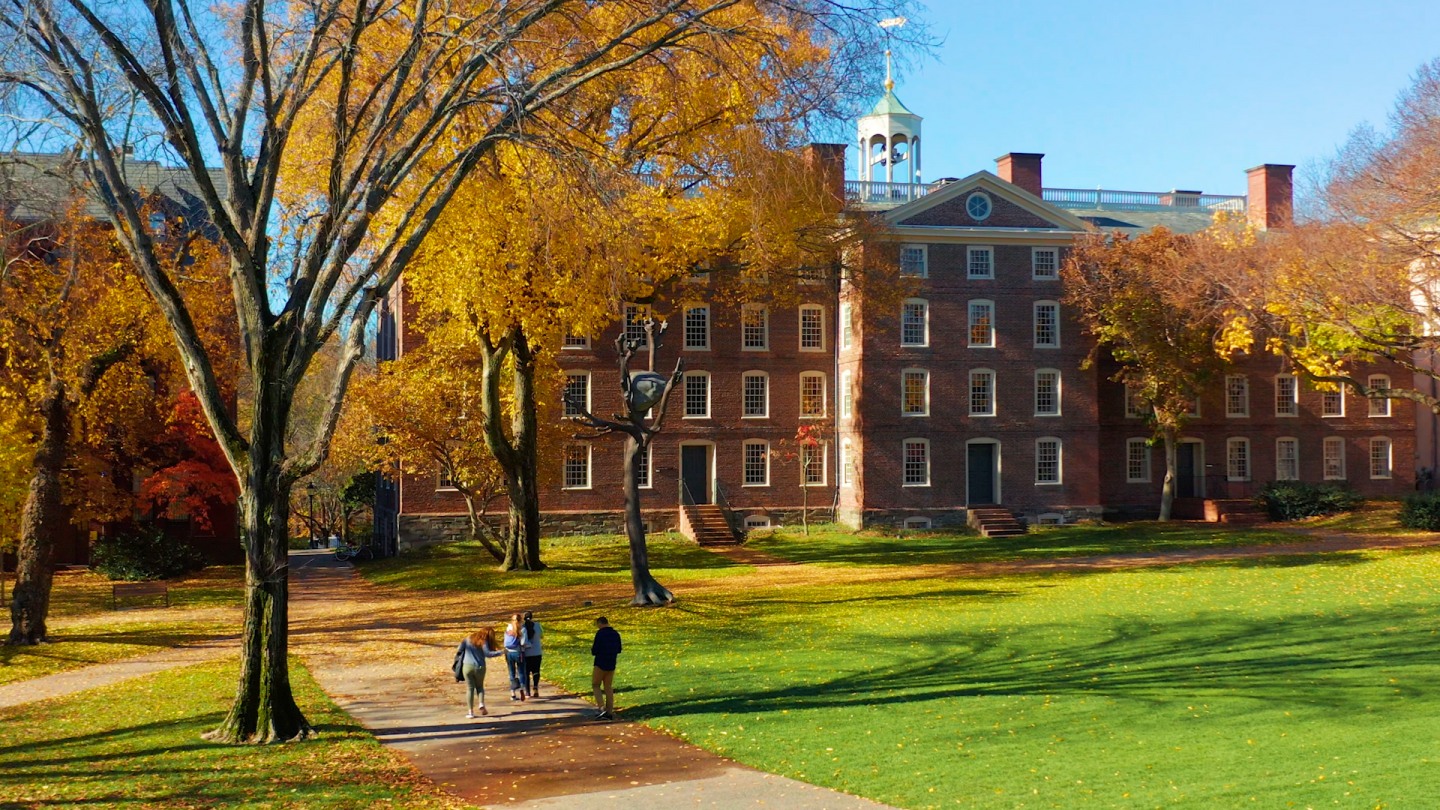


Cambridge, MA
Broadest scope; unmatched name recognition globally
The key strategic insight: The most common application mistake is treating the Ivy League as a single category. A student who applies to all eight with essentially the same essays and the same narrative will be less competitive at every school than a student who applies to four schools with specific, deeply researched, tailored applications. Fit matters, and demonstrating fit requires knowing each school well enough to write about it specifically.
A 3.6% acceptance rate doesn't mean 96.4% of applicants are unqualified. It means the pool is extraordinarily competitive, and differentiation through narrative, essays, and strategic positioning matters more than any single metric. Tychr students consistently outperform these averages because our approach treats admissions as a solvable strategic challenge, not a lottery.
The ED advantage is real: At binding ED schools (Columbia, Penn, Brown, Dartmouth, Cornell), applying early carries a genuine 2–3x acceptance rate advantage over Regular Decision.

Research access for undergraduates: All eight Ivy League schools offer undergraduate research opportunities. Princeton is particularly known for its senior thesis requirement — every undergraduate conducts original research. Harvard's URAF (Undergraduate Research Apprenticeship Fund) and Columbia's research centres provide additional access. Brown's Open Curriculum encourages self-designed research pathways.
At the Ivy League level, academic credentials are the baseline, not the differentiator. Every admitted student has near-perfect grades. The decisions are made on extracurricular depth, essay quality, recommendation letter specificity, and coherence of the overall application narrative.
Course rigour matters more than GPA inflation: an IB student with 42 points across HL Maths, HL Physics, and HL Chemistry is more competitive than one with 44 points across easier HL combinations.
CSS Profile: The financial aid application required by all Ivy League schools for need-based aid. Opens October 1. Submit with Early applications by November 1; by February for Regular Decision. Always apply — the cost of not applying when you qualify can be $200,000+ over four years.
The question students and families often ask is: should I apply to all eight Ivy League schools? The honest answer: almost never.
Each Ivy League school has distinct supplemental essay requirements — some quite demanding (Cornell's school-specific essays, Columbia's lists, Princeton's intellectual essay). Writing genuinely tailored supplementals for eight schools simultaneously while maintaining quality is practically impossible. The result is eight mediocre applications rather than four strong ones.
Choose the Ivies where you have genuine fit — where your intellectual interests align with the school's specific academic strengths, where the campus culture matches how you learn and live, and where you can write specifically and compellingly about why you belong there. Apply to those schools exceptionally well.
The exception: If a student has a genuinely strong, versatile application narrative that adapts naturally to multiple schools, applying to more Ivies may be appropriate — this is a case-by-case judgement made with your Tychr counsellor.
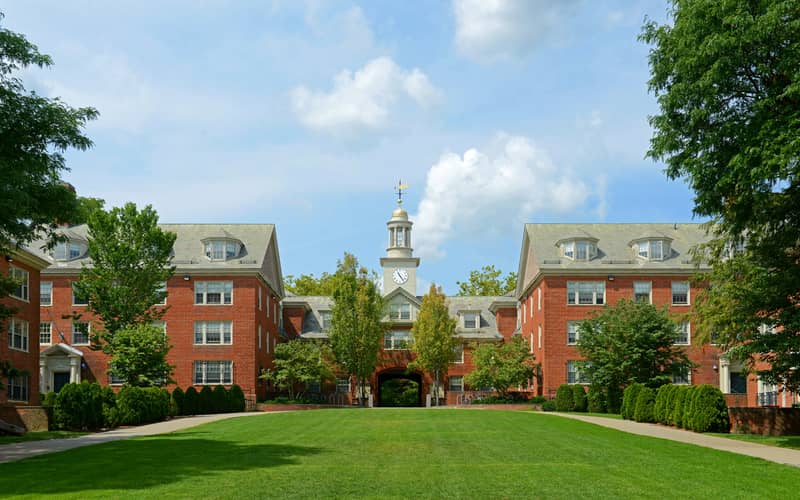
Typical Tychr Allocation
2–4 Ivies
as reach applications, within a balanced list of 10–14 total US universities covering reach, match, and safety categories.
The “Ivy League” label is widely used as a proxy for elite US university education, but several non-Ivy institutions are equally or in some dimensions more selective and prestigious.
For STEM Applicants
MIT is often the stronger target than any Ivy League school — its research culture, faculty access, and alumni network in technology and science are unmatched.
Build your list based on genuine fit and academic strength in your intended field, not on the Ivy League label as a category. Some of the best applications Tychr has helped produce have been to MIT or Stanford over Ivy League schools, because they were the right fit for a specific student.
What's the same: The application process is identical — same Common App, same essays, same admissions criteria. International students are held to the same academic and extracurricular standards as domestic applicants.
At need-aware schools (Yale, Columbia, Penn, Brown, Dartmouth, Cornell), financial need can affect admissions decisions for international students. At need-blind schools (Harvard, Princeton), it cannot. This should influence which schools you apply Early vs. Regular Decision.
For international students whose grading systems are less familiar to US admissions officers, SAT/ACT scores provide a helpful benchmarking signal. Tychr generally recommends international students submit strong scores rather than going test-optional.
TOEFL or IELTS scores are required for international applicants whose primary language of instruction is not English. Minimum scores vary, generally TOEFL 100+ or IELTS 7.0+.
All admitted international students require an F-1 student visa. This process begins after admission and is well-supported by all Ivy League international student offices.
Admissions officers at Ivy League schools are experienced in evaluating international curricula — IB, A-Levels, Indian boards, Chinese Gaokao (limited), and others. Your academic record will be read in the context of your specific curriculum and school.
Admissions officers at Ivy League schools evaluate applicants through a holistic lens, but “holistic” doesn't mean “arbitrary.” There are consistent qualities that appear in the admitted student profiles year after year.
Not “I love learning” — specific evidence that the student pursues ideas beyond what's required. Independent reading, research questions, extended projects, intellectual arguments in essays. Every Ivy League school uses some version of the phrase “intellectual vitality” in its admissions materials.
At activities the student cares about. Not titles — outcomes. Something built, something changed, something measurable. The student who founded a programme serving 40 people is more competitive than the one who was vice president of five clubs.
A coherent story that runs through the academic record, the extracurricular profile, and the essays. The admissions officer reading a file should be able to describe who the applicant is in a sentence or two. Files that could be anyone's are the ones that get deferred.
The strongest supplemental essays are ones that could only have been written by this student for this school. They reference specific courses, programmes, professors, or campus traditions, and connect those specifics to things the student has already demonstrated.
The recommendation letters exist to answer one question: what kind of person is this student in the room? The best letters describe specific moments of intellectual or personal character that grades and activities can't communicate.
Campus fit is under-evaluated by most Ivy League applicants, and over-regretted by students who end up at schools that don't match how they live and learn.
Most Ivies have residential college systems — semi-autonomous communities where students live, eat, and have much of their social life. Yale and Harvard have the most developed residential college systems (12 and 12 respectively). Princeton's residential colleges are strong. Cornell's housing varies by college. Columbia has less of a residential college identity, being in New York City partly replaces the campus community function.
Columbia (New York City), Penn (Philadelphia), and Cornell (Ithaca, relatively remote) represent the three ends of the urban spectrum. Students who want city access thrive at Columbia. Students who want a coherent campus community often find Princeton, Dartmouth, or Yale a better environment.
Dartmouth is the smallest and most intimate Ivy — its community is tight, its alumni network unusually loyal, and its D-Plan creates an unusual academic calendar. Cornell is the largest and most diverse, with over 15,000 undergraduates across seven colleges — it can feel more like a large university than a traditional Ivy.
Varies significantly by school. Dartmouth, Cornell, and Penn have more active Greek systems than Yale, Princeton, or Columbia.
The Ivy League's career value is real, but more nuanced than the “open every door” narrative suggests.
Finance, consulting, law, and medicine, particularly on the East Coast of the US. Globally, in markets where the Ivy League name carries strong recognition (India, China, Southeast Asia, Middle East, Latin America). In fields where the alumni network effect is strong — venture capital, private equity, top-tier law firms.
Technology entrepreneurship on the West Coast, where Stanford and MIT alumni networks are stronger than most Ivy alumni communities. Creative industries, where portfolio and work matter more than institutional affiliation. Certain non-profit and public service sectors.
All eight Ivies have strong alumni networks, but quality varies. Dartmouth's alumni engagement rate is historically the highest. Yale's and Princeton's alumni communities are particularly tight-knit. Cornell's alumni network is large and has particular strength in hospitality, agriculture, engineering, and ILR-related fields.
Career services and recruiting: All Ivy League schools have strong recruiting pipelines to top firms in finance (Goldman, McKinsey, Bain, BCG), law (V10 firms), and consulting. On-campus recruiting brings the most selective employers to every Ivy League campus each year.
Tychr's Ivy League placement record is built one student at a time. Every offer in our record represents a specific student, a specific strategy, and specific application execution that made the difference.
Placement Highlights — Annual Acceptances Across All 8 Schools
“Tychr helped me present a coherent story that tied my research to every part of my application. The mock interview preparation meant I walked into my interview ready, not just hoping. I was accepted to MIT.”
Tanvi
MIT (comparable peer institution)
“Tychr helped me see my application as a story, not a form. My counsellor worked with me to identify the narrative thread connecting my academic interests, research, and community project. Stanford was the school I most wanted, and the one I'd convinced myself was impossible.”
Tanuj
Stanford University
“My counsellor knew the Princeton application inside out, specifically what SPIA supplementals need to achieve and what the alumni interview tends to explore. I got into Princeton.”
Raul
Princeton University
“Columbia's Core Curriculum essay requires real engagement with specific texts. My Tychr counsellor helped me write about the Core in a way that was genuine, not performative. I was accepted to Columbia.”
Sarah
Columbia University
“From day one, Tychr built a strategy around my specific profile. Summer internship sourcing, essay coaching across four rounds, a complete school list — all of it coordinated. The result was an Ivy League offer.”
Vishaal
Ivy League University
The most common and most costly mistake. An essay that could have been sent to any Ivy with minor edits signals to admissions officers that the student applied to the school's name, not the institution. Every “Why Us?” essay requires genuine, specific knowledge of that school's academic culture.
The personal statement is not a résumé in prose form. Admissions officers have already read your activities list. The essay should reveal how you think, not what you've done.
Results in eight mediocre supplementals instead of four excellent ones. Select the Ivies where you genuinely fit and can write about specifically.
A long list of activities at surface level tells no story. Two or three areas of genuine depth and demonstrable impact tell an admissions officer something memorable.
A passionate, specific letter from a teacher who knows you beats a tepid letter from a prestigious figure who barely does.
Cornell's supplements are uniquely demanding — each of its seven colleges has its own specific prompts requiring genuine knowledge of the programme. Students who treat Cornell as a “backup Ivy” without doing the supplemental work are regularly rejected.
Students who have a genuine first-choice Ivy and a complete application by November 1 frequently leave a 2–3x acceptance rate advantage unused by applying Regular Decision.
CSS Profile deadlines are real. Missing them costs aid offers, sometimes permanently.
For many students receiving substantial need-based financial aid, particularly at need-blind Ivy League universities, the answer is yes. The net cost can be lower than that of comparable institutions, while the long-term benefits of the academic environment, alumni network, and career opportunities are significant. For students paying full tuition without aid, the value depends more on their intended career path and field of study.
Yes. Research experience is not a requirement for admission to Harvard or any Ivy League university. Applicants without research backgrounds should instead demonstrate intellectual curiosity, initiative, meaningful achievements, and sustained engagement through other academic or extracurricular activities.
Not necessarily. Submitting a larger number of less personalised applications often reduces overall application quality. Focusing on 2–4 carefully selected Ivy League universities and investing time in producing exceptional, tailored supplemental essays is generally a more effective strategy.
Start preparing as early as possible. By Grade 12, many of the factors considered by admissions committees—such as academic performance, extracurricular involvement, and long-term achievements—are already established. Students who gain admission often begin building their profiles in Grades 9 or 10. If you're already in Grade 12, prioritise crafting highly specific, authentic, and compelling personal essays and supplemental applications.
A 45-minute 1:1 call with a Tychr Ivy League specialist. We review your profile, identify your strategic fit across the eight schools, and build your roadmap to application.
Limited slots available each week
Tell us where your student is headed. A Tychr counselor will follow up within one business day to map the right path forward.
No credit card. No commitment. 100% free.